
Youth Sustainability Index 2025: Understanding Indonesia’s Green Generation
-
KG Media
-
KG Media
Speaker: Dr. Muhammad Faisal Founder & Research Advisor Youthlab
Dr. Muhammad Faisal presented the findings of the Youth Sustainability Index (YSI) 2025, developed by Youthlab and WWF Indonesia to measure environmental awareness and sustainability behaviors among Indonesian youth aged 16–30. Using a mixed-method approach combining ethnographic research, interviews, and a validated psychometric survey, the study provides insights into how young people perceive, experience, and act on sustainability.
The findings show that Indonesian youth generally demonstrate positive individual environmental behaviors, such as conserving energy, but are less engaged in collective environmental actions and discussions. While many young people are concerned about the future impacts of climate change, this concern does not always translate into stronger community participation or environmental stewardship. The study emphasizes that effective sustainability communication should be tailored to youth culture, digital behaviors, and lived experiences rather than relying on traditional top-down approaches.
Key Takeaways:
- Introduced the Youth Sustainability Index (YSI) 2025), developed by Youthlab and WWF Indonesia using a mixed-method and psychometric research approach.
- The index measures five dimensions of youth sustainability: physical properties, cognition, people actions, environmental perception, and environmental worry.
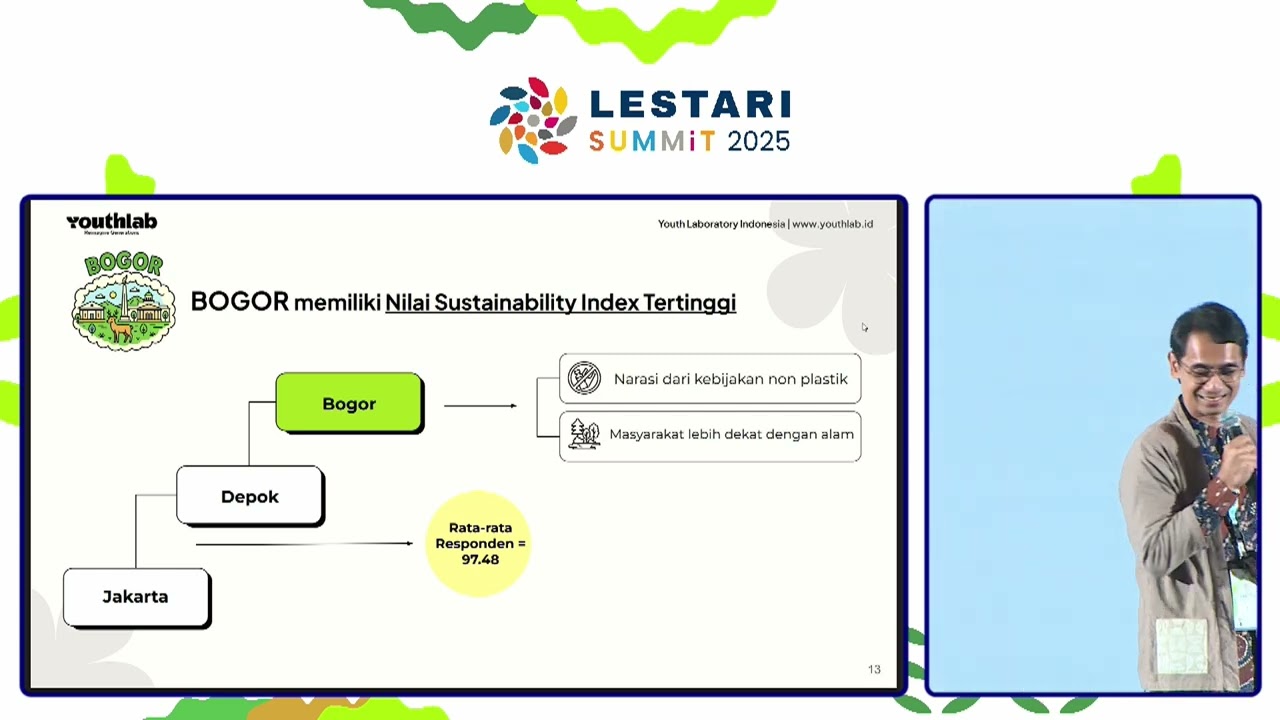
- Bogor recorded the highest sustainability index among Jakarta, Depok, and Bogor, influenced by environmental conditions and local environmental policies.
- Young people scored highest on simple individual actions, such as saving electricity, but participation in environmental discussions and community activities remained low.
- Waste management remains a challenge, with many respondents reporting that they do not routinely separate household waste.
- Respondents showed a paradox: they were highly concerned about future climate change, yet many reported rarely experiencing or recognizing the impacts of environmental degradation in their daily lives.
- Higher sustainability scores were associated with older age, spending time caring for plants or pets, and lower social media use, suggesting that stronger connections with nature support environmental awareness.