


Lestari Awards 2026
Submissions Are Now Closed.
Thank You For Your Participation
We are grateful
for the remarkable response to Lestari Awards 2026.
Submitted initiatives are now undergoing the
assessment process.


Recognizing an organization who has implemented a program that has conserved, restored,
regenerated or rehabilitated and developed sustainable ecosystems including existing
terrestrial or aquatic ecosystems.
Program examples:
- Wetland
conservation programs
- Coral reef restoration and marine biodiversity
protection
- Responsible sourcing practice, applying environmental and social
safeguards for raw materials and commodities
- Reforestation projects through tree
planting
- Biodiversity park to protect flora and fauna species and/or to provide
research and development facilities
Additional note for Regional Awards:
-
This is a regional category, if you win, you will need to resubmit your entry in English
GRI Indicative Reference:
- 304-3 Habitats protected and restored
Recognizing an organization which has implemented innovative methods that successfully improve reduction, reuse, and recycling of solid waste, as well as responsible waste disposal.
Recognizing organizations committed to circularity by reducing resource use and waste through regenerative practices. This includes designing products and processes for reuse, repair, recycling, and regeneration, ensuring continuous material flows and longer product life cycles to cut environmental impact and create lasting value.
Program Examples:
- Closed-loop production systems
- Upcycled product line
- Use of recycled or upcycled materials in manufacturing
- Take-back programs for products and packaging
- Integration with advanced waste management practices (repair, refurbishment, and remanufacturing initiatives)
- Product life cycle assessments (LCAs) implementation
Indicative reference to GRI
- 301-1: Materials used by weight or volume
- 301-2: Recycled input materials used
- 301-3: Reclaimed products and their packaging materials
- 306-2: Waste by type and disposal method
- 306-4: Waste diverted from disposal
- 306-5: Waste directed to disposal
Recognizing an organization which favors renewable energy sources in its supply and organization value exhibited chain. The originality, provided market-based solutions and environmental benefits, whilst created significant socio-economic contribution through the use of renewable energy in its products and/or programs
Recognizing an organization which has demonstrated energy efficiency and energy
conservation throughout its supply and value chain, developed best energy-saving
projects, whilst demonstrated energy savings, backed-up by data, with particular
consideration for innovation and replicability.
Program examples:
-
Automated energy management (or switch-off) systems for lighting, cooling and other
electrical use
- Utilization of lighting systems with energy-efficient LEDs
-
Energy-efficient equipment
Additional note for Regional Awards:
- This is a
regional category, if you win, you will need to resubmit your entry in English
Recognizing an organization that has proactively initiated and led efforts to eliminate
discrimination and enhance inclusivity across the workplace and value chain. This
organization has demonstrated excellence in fostering an equitable work environment,
improving employee engagement, and ensuring social, economic, and political inclusion
for all—regardless of gender, disability, race, origin, or other socioeconomic
status.
Program examples:
- Inclusive employment programs for persons
with disabilities and/or marginalized communities
- Leadership training programs
-
Partnership with women-led businesses or provision of opportunities to promote gender
equality in entrepreneurship
- Fair wages and equal pay for all
gender
Additional note:
- This is a regional category, if you win, you will
need to resubmit your entry in English.
GRI Indicative Reference:
- 405-1 Diversity of governance bodies and employees
- 405-2 Ratio of basic salary and remuneration of women to men
- 406-1 Incidents of discrimination and corrective actions taken
Recognizing an organization which has advanced fundamental human rights and responsible labor practices throughout its operations, where the organization upholds fundamental human rights principles in all ways that they interact with people (employees, consumers, customers, suppliers, etc.).
Program Examples
- Human rights policy and due diligence
- Anti-harassment and ethical workplace training programs
- Fair wages and safe working conditions policy Supplier code of conduct requiring ethical labor practices
- Ethical hiring
- Supplier transparency
- Employee check-ins program
Indicative reference to GRI
- 402-1 Minimum notice periods regarding operational changes
- 407-1 Operations and suppliers in which the right to freedom of association and collective bargaining maybe at risk
- 408-1 Operations and suppliers at significant risk for incidents of child labor
- 409-1 Operations and suppliers at significant risk for incidents of forced or compulsory labor
- 410-1 Security personnel trained in human rights policies or procedures
Recognizing an organization which has developed and implemented innovative career development system, which may include effective, consistent and all rounded training programs to enable its talents to execute business strategies and contribute to long-term success of the organization.
Program Examples
- Continuous learning opportunities and/or professional certifications to employees
- Leadership development programs for employees at all level
- Mentorship schemes to support new hires Reference to UN SDGs
- Comprehensive upskilling programs for technical staff
Indicative reference to GRI
- 404-1 Average hours of training per year per employee
- 404-2 Programs for upgrading employee skills and transition assistance programs
- 404-3 Percentage of employees receiving regular performance and career development reviews
Recognizing an organization which has developed and implemented program to positively impact and strengthen links with the local community and indigenous people within the locality of which the organization operates. The program should respond to a specific need in the community and should focus on the measures taken to engage with the community and all relevant stakeholders, as well as the positive impact delivered through the program.
Program Examples
- Educational scholarship for children in underprivileged communities
- Health and hygiene awareness campaign Reference to UN SDGs
- Partnership with local suppliers, farmers and community
- Healthcare or educational program tailored to community needs, such as mobile clinics or vocational training
- Work-based learning program such as internship
Indicative reference to GRI
- 411-1 Incidents of violations involving rights of indigenous peoples
- 413-1 Operations with local community engagement, impact assessment, and development programs
Recognizing an organization which has developed and implemented effective programs to
promote the health and wellbeing of employees which has contributed to the overall
improvement in productivity and increase in satisfaction and morale of staff.
Program examples:
- Workplace fitness programs and subsidized gym
memberships
- Medical support to employees
- Mental health counseling
-
Comprehensive healthcare plans for employees
- Work-life balance program
Additional note for Regional Awards:
- This is a regional category, if you win, you
will need to resubmit your entry in English
GRI Indicative Reference:
- 401-2 Benefits provided to full-time employees that are not provided to temporary or part-time employees
- 403-1 Occupational health and safety management
- 403-3 Occupational health services
- 403-6 Promotion of worker health
- 403-8 Workers covered by an occupational health and safety management system
Recognizing organizations that embed Environmental, Social, and Governance (ESG) principles in their supply chain through strategies and partnerships that promote sustainability and ethical practices. This category also focuses on programs such as responsible sourcing, supplier collaboration, and programs that reduce environmental and social risks across the supply chain.
Program Examples
- Supplier capacity building and development program
- Collaboration with suppliers to on sustainability matters, e.g., emissions reduction and logistics efficiency improvement program
- Green procurement policies for suppliers
- Green logistics and digitalization
- Supplier screening
Indicative reference to GRI
- 308-1 New suppliers screened using environmental criteria
- 308-2 Negative environmental impacts in the supply chain and actions taken
- 402-1 Minimum notice periods regarding operational changes
- 414-1 New suppliers screened using social criteria
- 414-2 Negative social impacts in the supply chain and actions taken
Recognizing an organization that has established groundbreaking and mutually beneficial
partnerships beyond its supply chain, leading to positive and sustainable impacts on
communities and/or the environment. These partnerships may involve non-governmental
organizations (NGOs)—which are independent, non-profit entities focused on humanitarian
or development objectives—as well as local governments, communities, academia, or other
stakeholders, with measurable outcomes that contribute to societal and environmental
well-being.
Program examples:
- Collaboration with local governments
to develop and promote renewable energy adoption in remote communities
- Partnership
with NGOs to implement large-scale reforestation projects
- Collaboration with
startups or tech companies to drive innovation and increase effectivity and efficiency
in organizations cycle
Additional note for Regional Awards:
- This is a
regional category, if you win, you will need to resubmit your entry in English
Recognizing an organization that has significantly restructured its business strategies,
operations, or models to integrate sustainable development principles, ensuring lasting
economic, social, environmental and institutional benefits.
Program
examples:
- Transition from a traditional manufacturing business to a
circular economy model
- Inclusive workforce transformation
- Digital
technologies adoption to streamline operations, improve sustainability tracking, improve
efficiency and productivity
Additional note for Regional Awards:
- This is
a regional category, if you win, you will need to resubmit your entry in English
Recognizing an organization that has provided products and/or services which deliver
meaningful environmental and social benefits while addressing local challenges and
opportunities in Indonesia. These solutions incorporate sustainability principles into
their design and execution, demonstrate innovation, market relevance, and a commitment
to environmental stewardship, social progress, and economic resilience.
Program examples:
- Mobile applications development that promote sustainable
living
- Product design with minimal negative environmental impact
- Secure
certification for sustainable practices or product lines
Additional note for
Regional Awards:
- There’s no regional competition for this category
GRI Indicative Reference:
- 301-2 Recycled input materials used
- 301-3 Reclaimed products and their packaging materials
- 416-1 Assessment of the health and safety impacts of product and service categories
- 417-1 Requirements for product and service information and labelling
- 418-1 Substantiated complaints concerning breaches of customer privacy and losses of customer data


Media Exposure
Media coverage valued at more than IDR 150 million across 7 major Lestari media platforms to amplify positive impact and inspire collaboration.
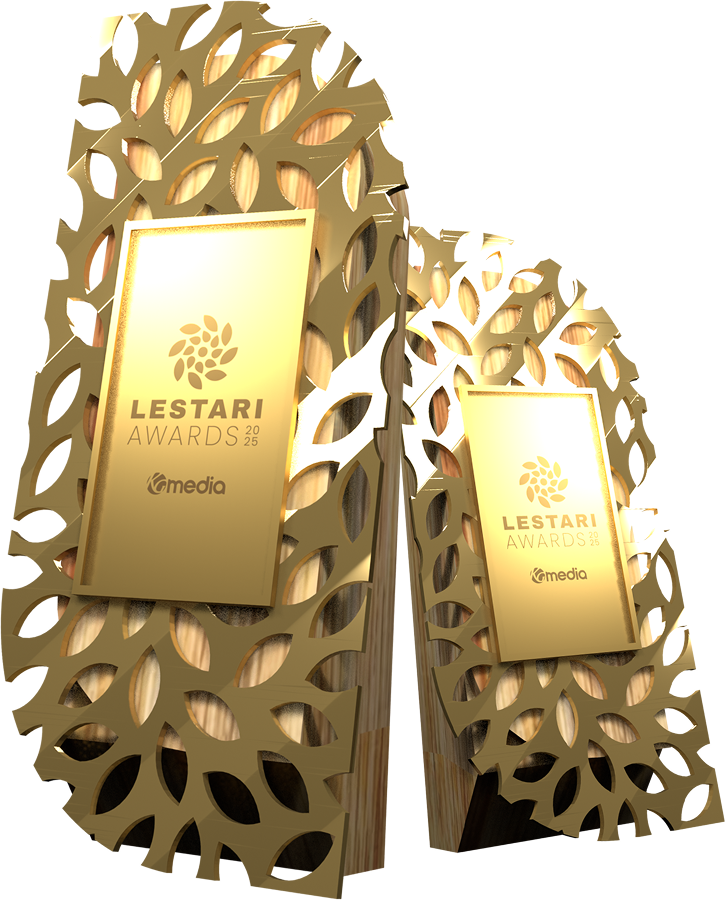
The Trophy
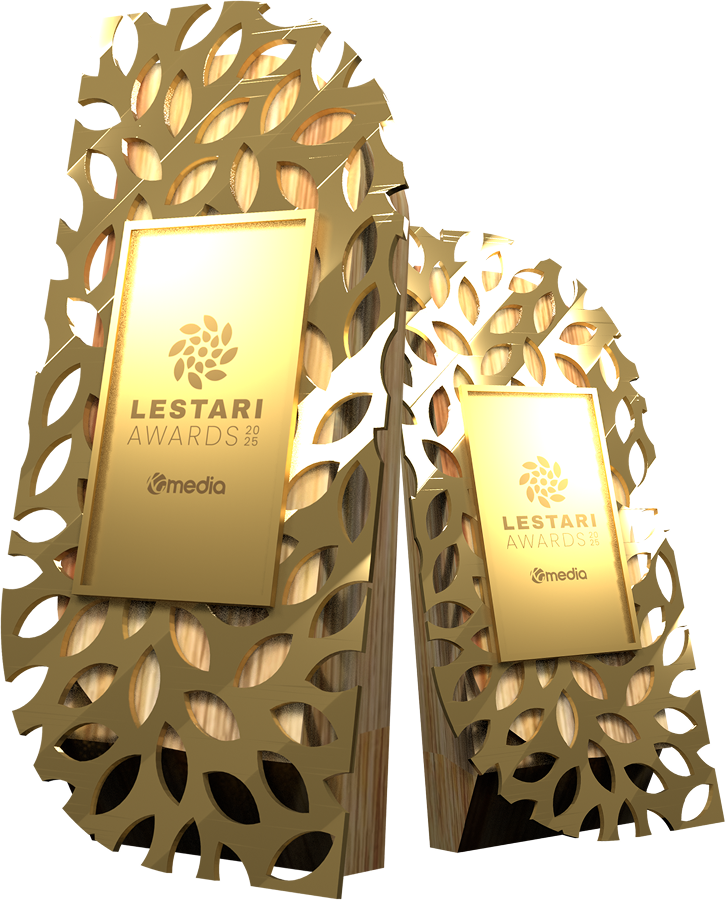
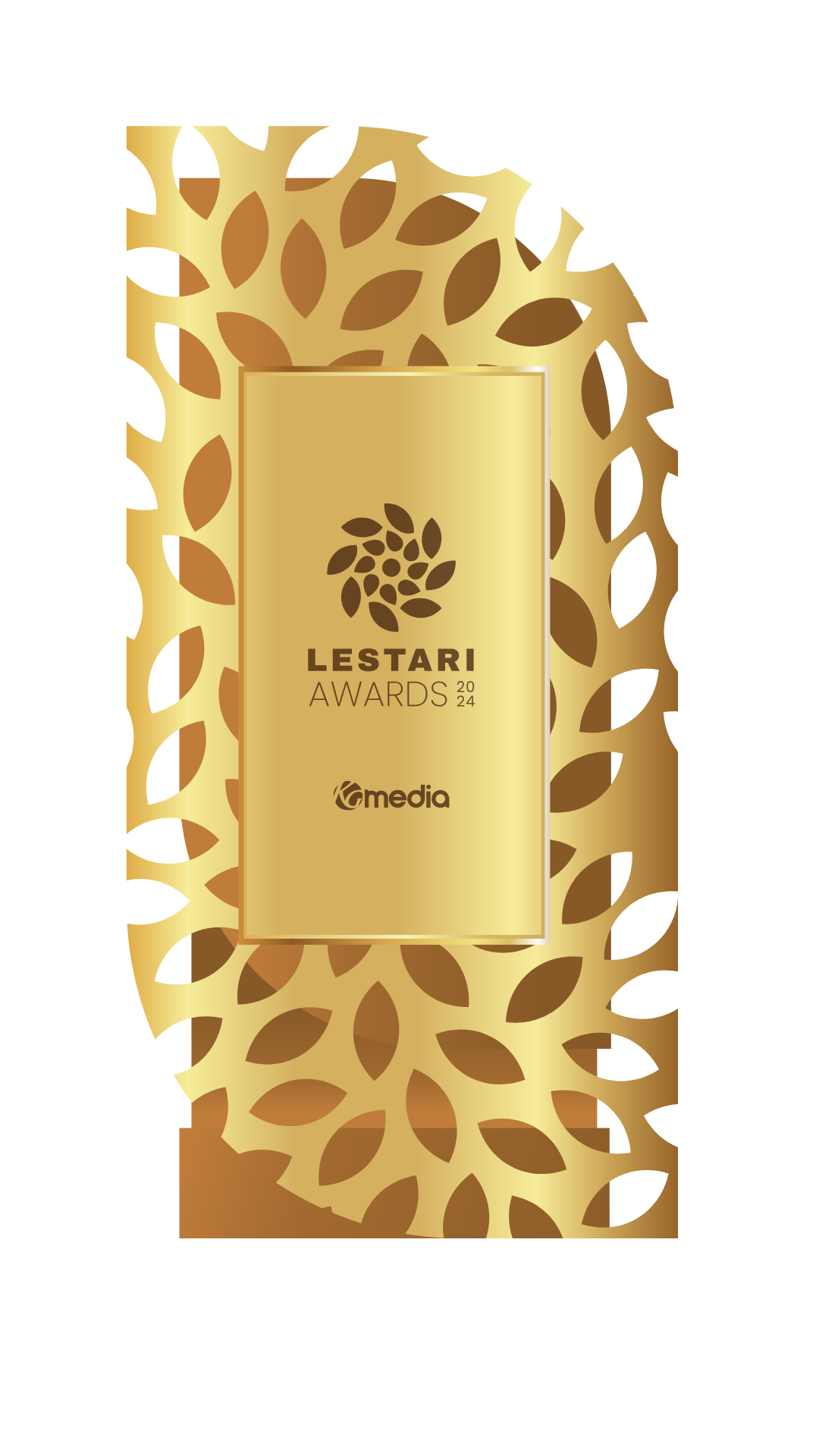
A trophy as a symbol of the journey toward sustainability. Its nature-inspired design, shaped like a leaf, represents growth and renewal.

Participate in Regional Awards
A gold ticket to participate and compete in the Asia ESG Positive Impact Awards 2026.

Complete the online registration form and submit all required information. Registration opens on February 13 and closes on May 22.
- Our team will review all applications to ensure they meet the eligibility criteria.
- Selected candidates will be shortlisted for Assessment Stage.
A panel of expert judges will evaluate the shortlisted submissions according to established criteria.
- Selected candidates will be required to submit financial statements during the verification process.
- Finalists will present their projects online to the jury panel for further evaluation.
- Winners will be officially announced and celebrated at the Awarding Night.
- Winners are granted direct entry to the Asia ESG Positive Impact Awards 2026 regional competition.
Assessment regional competition the Asia ESG Positive Impact Awards 2026.
Awarding night for the Asia ESG Positive Impact Awards 2026 at Kuala Lumpur, Malaysia.
Register or log in with your KG Media ID to access the registration form.
Fill out the registration form and select the award category(ies).
Complete the final step by submitting your entry details and paying the required fee(s).
Recognizing Indonesian Leaders and Innovators in Sustainability
Lestari Awards by KG Media is an award presented by KG Media, a leading media company in Indonesia, to honor and appreciate initiatives that demonstrate sustainability, social responsibility, and environmental stewardship. The award aims to raise awareness and inspire positive actions on sustainability issues across various sectors, including environmental, social, and economic fields.
The winners of the 2024 ESG Positive Impact Awards will represent Indonesia at the Asia ESG Positive Impact Awards in 2025.


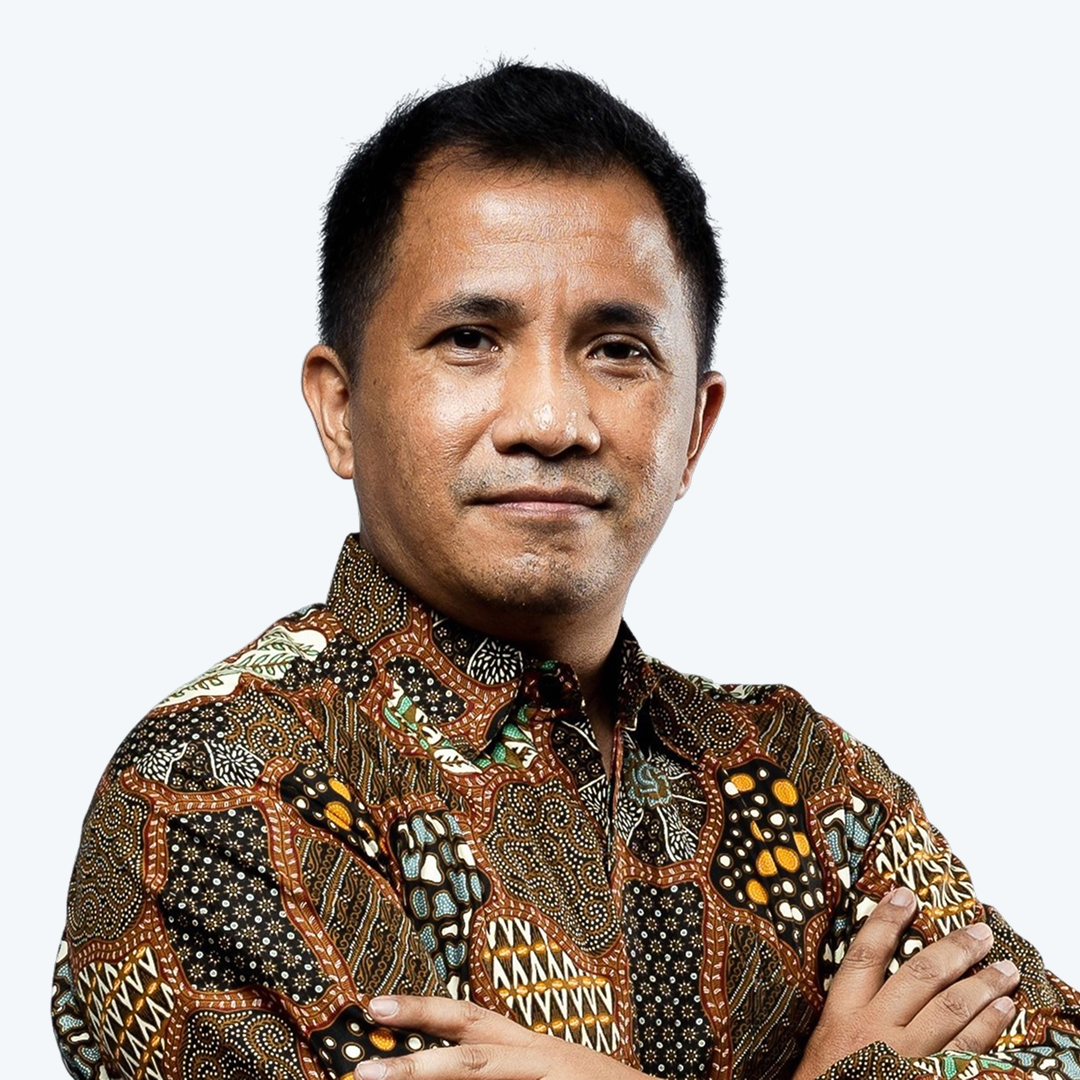
Leonardo A. A. Teguh Sambodo serves as Deputy for Food, Natural Resources, and Environment at the Ministry of National Development Planning/Bappenas, and as Chair of the National SDGs Implementation Team. His role involves coordinating and formulating national development policies related to food systems, natural resources, environmental sustainability, and accelerating Indonesia’s achievement of the Sustainable Development Goals.


Rio Zakarias Widyandaru is a member of IS2P and the Founder & Director of Socialimpact.ID, a consulting organization focusing on sustainability, CSR, ESG, and community development. Through Socialimpact.ID, he promotes more measurable and sustainable social responsibility practices that create real impact for communities. His work is closely linked to strengthening SDGs implementation and sustainability practices across social and corporate sectors.

Rina Mardiana is a lecturer at the Faculty of Human Ecology, IPB University, in the Department of Communication and Community Development. Her expertise includes agrarian and rural political ecology, human ecology, environmental geography, and socio-anthropology. Her academic work focuses on community development, environmental issues, social forestry, ecotourism, and rural development dynamics.


Denis Korchunov is a Regional Sustainable Energy Specialist at the United Nations Development Programme (UNDP). He supports UNDP country offices across the Middle East and North Africa on sustainable energy initiatives, including renewable energy, energy access, and low-carbon transition programs. His work contributes to climate action and inclusive development through practical energy solutions.

Satrio Prakoso is the Chairman of IS2P and Director & Principal Consultant of Sustainahaus. He is a green building and ESG specialist with extensive experience in sustainability strategy, certification, and implementation. Through Sustainahaus, he supports organizations in integrating sustainability into business strategy, assets, and operations, particularly across Indonesia and the Asia-Pacific region.


Dr. Vishnu Juwono is the Chairman of UI GreenMetric World University Rankings and an Associate Professor of Public Governance at Universitas Indonesia. He leads initiatives that advance sustainability in higher education, encouraging universities worldwide to strengthen environmental performance, governance, and sustainable development impact.
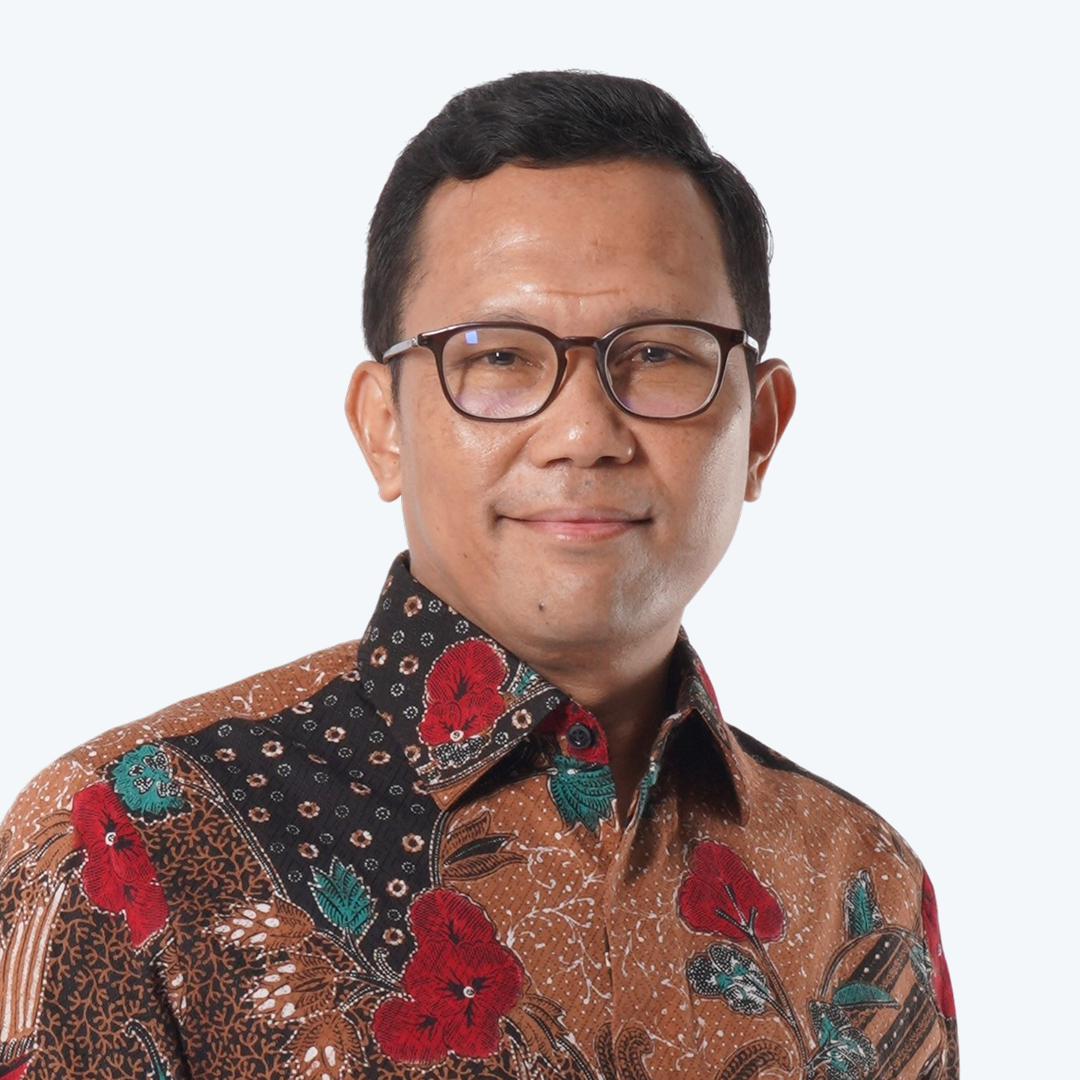
Pungkas Bahjuri Ali is Senior Advisor to the Minister for Social Affairs and Poverty Alleviation at Indonesia’s Ministry of National Development Planning/Bappenas, and Head of the National SDGs Secretariat. He plays a key role in advancing inclusive development planning, poverty reduction, and cross-sector collaboration to accelerate Indonesia’s Sustainable Development Goals agenda. He holds a doctoral degree from the Australian National University and has extensive experience in national development policy.

Prof. Juniati Gunawan is a sustainability academic and practitioner serving as Head of the Trisakti Sustainability Center/SDGs Center at Universitas Trisakti. Her expertise spans sustainability accounting, sustainability reporting, ESG, governance, and sustainable finance. She is also a co-founder of the Indonesian Society of Sustainability Professionals (IS2P) and has served as a sustainability advisor to the IFC–World Bank Group since 2015.


Angga Pratama Putra is the Acting Climate and Market Transformation Program Director at WWF-Indonesia. His work focuses on market transformation, sustainable commodities, and promoting more responsible production and consumption practices. Through his role at WWF-Indonesia, Angga is involved in sustainability initiatives, including strengthening supply chains and advancing sustainable commodity practices such as palm oil.


Prof. Dr. Florentina Kurnasari is the Vice Rector for Research, Innovation, and Sustainability at Universitas Multimedia Nusantara (UMN). Her work focuses on impactful research, sustainable innovation, and strengthening the role of higher education institutions in addressing social and economic challenges. Her areas of expertise include women’s empowerment and MSME development, particularly in building capacity, independence, and competitiveness among entrepreneurs. Through her role, Prof. Florentina actively promotes collaboration between academia, industry, communities, and stakeholders to create inclusive and sustainable solutions.


Andreas Pandu Wirawan is the COO of EcoXYZtem, a platform focused on strengthening the sustainability and climate innovation ecosystem. In his role, Pandu contributes to managing operations, building strategic partnerships, and supporting the growth of impact-driven solutions. He is involved in connecting key stakeholders, including startups, investors, corporations, and communities, to accelerate the transition toward a more sustainable economy. With his experience in operational leadership and ecosystem development, Pandu plays an important role in ensuring that EcoXYZtem’s programs and initiatives are effective, collaborative, and impact-oriented.

Ratna Hartien is a Senior Advisory Lead at Angin Dampak Jaya. In her role, she focuses on strategic advisory, capacity building, and the development of impact-driven solutions for organizations and businesses. Ratna contributes to helping stakeholders design strategies that are more focused, sustainable, and relevant to market and community needs. With her experience in advisory and impact development, she supports collaboration between businesses, investors, communities, and other stakeholders to promote inclusive and sustainable growth.