
Strengthening Economic Resilience through Nature-Positive Transition
-
KG Media
-
KG Media
Speaker: Dewi Lestari Yani Rizki, Chief Conservation Officer, WWF-Indonesia.
This session explores the growing importance of a nature-positive transition in strengthening economic resilience. It examines how biodiversity loss and ecosystem degradation create risks for economies and businesses, while highlighting Indonesia’s natural capital, the financing needed to protect it, and the role of governments, businesses, and financial institutions in driving a sustainable and nature-positive future.
Key Takeaways
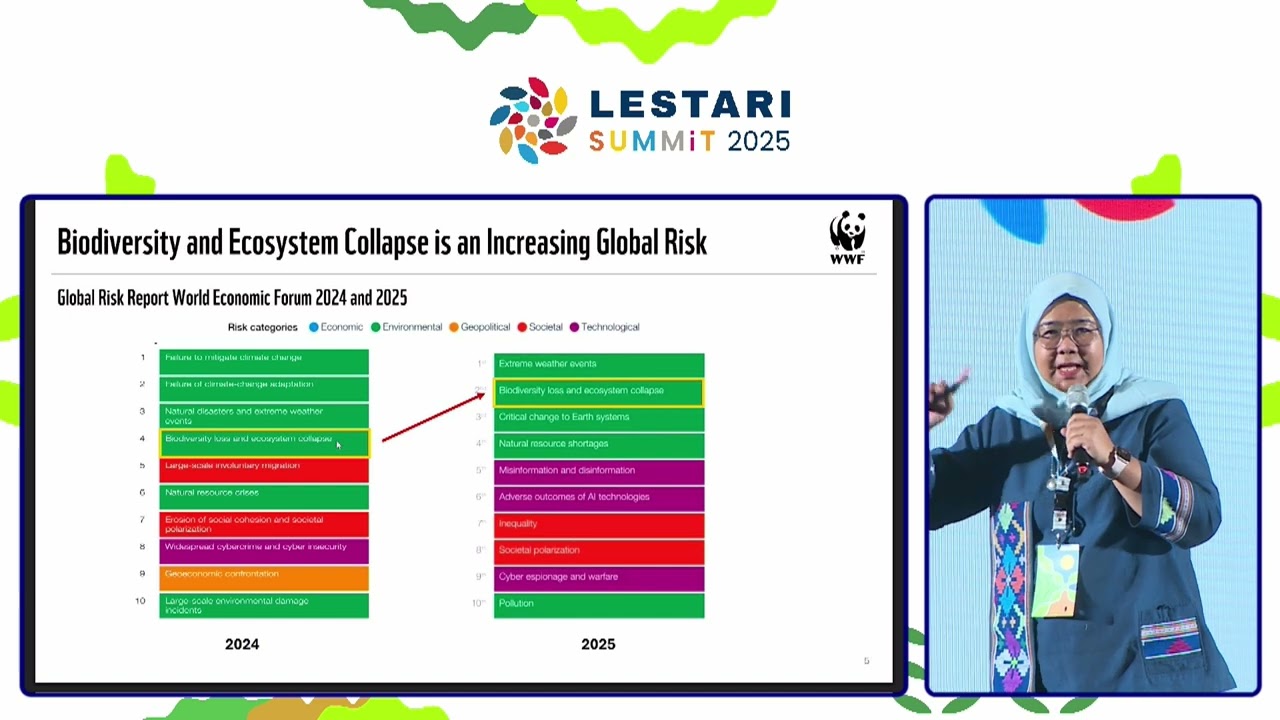
- Environmental degradation is occurring at an unprecedented rate, with biodiversity and ecosystem collapse emerging as significant risks to the global economy.
- Indonesia’s rich biodiversity is a fundamental resource for sustainable development, highlighting the need for effective strategies to manage natural resources and support long-term economic resilience.
- The Mahakam River demonstrates the strong interdependence between ecosystems and economic activities, serving as a vital resource for transportation, agriculture, fisheries, and biodiversity conservation.
- Economic activities in East Kalimantan both depend on and significantly impact the Mahakam River, contributing to environmental challenges such as degraded water quality, flooding, erosion, sedimentation, and declining fish stocks.
- Achieving the Kunming–Montreal Global Biodiversity Framework target of halting and reversing nature loss by 2030 requires transformative changes across all sectors.
- A substantial biodiversity financing gap remains, creating opportunities for investment in a nature-positive economy.
- Indonesia’s Biodiversity Strategy and Action Plan (IBSAP), aligned with the national development plans and the Kunming–Montreal Global Biodiversity Framework, requires significantly greater funding than current biodiversity allocations by the government.
- Global financial flows remain heavily skewed toward nature-negative activities, underscoring the need to scale up investment in nature-based solutions.
- Building a nature-positive economy requires collaboration among governments, businesses, financial institutions, and project developers.
- The Taskforce on Nature-related Financial Disclosures (TNFD) framework enables investors and financial institutions to better understand organizations’ nature-related dependencies, impacts, risks, and opportunities, supporting more informed decision-making.
Organizer

Participating Media